Rod Bearings
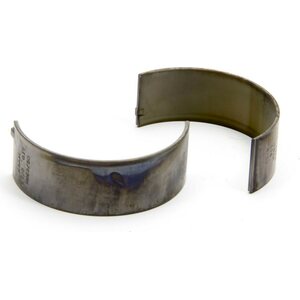
When selecting Chevy V8 connecting rod bearings, you quickly notice there are multiple journal sizes, and the suffix letters in the part number (A, H, N, P, V, D, C, X...) define the bearing construction and intended use. This guide summarizes the most common sizes and series in one place.
Base numbers such as CB-663, CB-745, CB-743 and CB-1512 define the engine family and journal diameter. The letters (A/H/N/P/V/D/C/X) describe the bearing material and special features.
| Journal Ø (in) | Engine family / application | Base part number |
|---|---|---|
| 1.8890" | SBC custom / “Honda journal” (Pro Stock / race applications) | CB-1663 |
| 2.000" | SBC Small Journal | CB-745 |
| 2.100" | SBC Large Journal / many LS applications | CB-663 |
| 2.200" | BBC (Big Block Chevy) | CB-743 |
| 2.375" | Mopar B/RB / 426 Hemi | CB-1512 |
| Letter | Meaning | Typical use |
|---|---|---|
| A | Aluminum (bi-metal) | Aluminum-based bearing material. Common for OEM-style rebuilds and street engines. Not as load-resistant as tri-metal series. |
| H | H-Series (tri-metal performance) | Popular choice for high-performance and higher RPM engines. |
| N | Narrowed | Provides additional clearance at the crankshaft journal edge. Often required with aftermarket cranks that have a larger corner radius. |
| P | P-Series (race) | High crush and thin overlay for severe-duty racing applications. |
| V | V-Series (lead-indium overlay) | More conformability; less common but suitable for specific builds. |
| D | Dowel pin hole | Designed for connecting rods using a locating dowel. Common in aluminum rods. |
| C | Coated | Bearing surface coated for additional protection. |
| X | Extra clearance | Provides approximately +0.001" additional oil clearance. |
Many aftermarket crankshafts use a larger corner radius at the journal edge to improve strength. A standard-width bearing may contact this radius, causing the engine to bind during assembly even if measured oil clearance appears correct.
For this reason, CB-663HN is commonly the correct choice for many 2.100" aftermarket crank applications.
In Calico-coated versions, the starting point is a standard M77/Clevite bearing (for example CB-663HN), to which Calico’s CT-1 dry film lubricant coating is applied. Structurally the bearing remains the same as the base version, but the bearing surface is enhanced with a friction-reducing and wear-resistant coating.
The CT-1 coating slightly increases bearing thickness, typically about 0.00025" per side (approximately 0.0005" on the diameter). For this reason, final oil clearance must always be measured with the crankshaft and assembled bearings, rather than relying solely on nominal specifications.
No number suffix = STD (standard size).
Examples:
Rod Bearings
Clevite Master Bearing Catalog
⚠️ Always verify measurements before final assembly. The installer is responsible for correct fitment and oil clearance.